
I worked with Sue Heilbronner on her book Leader Coach, a practical, actionable guide for leaders who wish to bring more coaching into their leadership and their organizations. Co-authored with Kaley Klemp, the book looks through the lens of conscious leadership and brings the notion of “leader coaching” to life through leader stories, engaging exercises, and practical tools that can be applied right away.
Sue and Kaley drew on their work as executive coaches and their experience teaching a Coaching Certification for Leader Coaches. The result is a book designed to help leaders start adding coaching to their leadership and to their team’s culture.
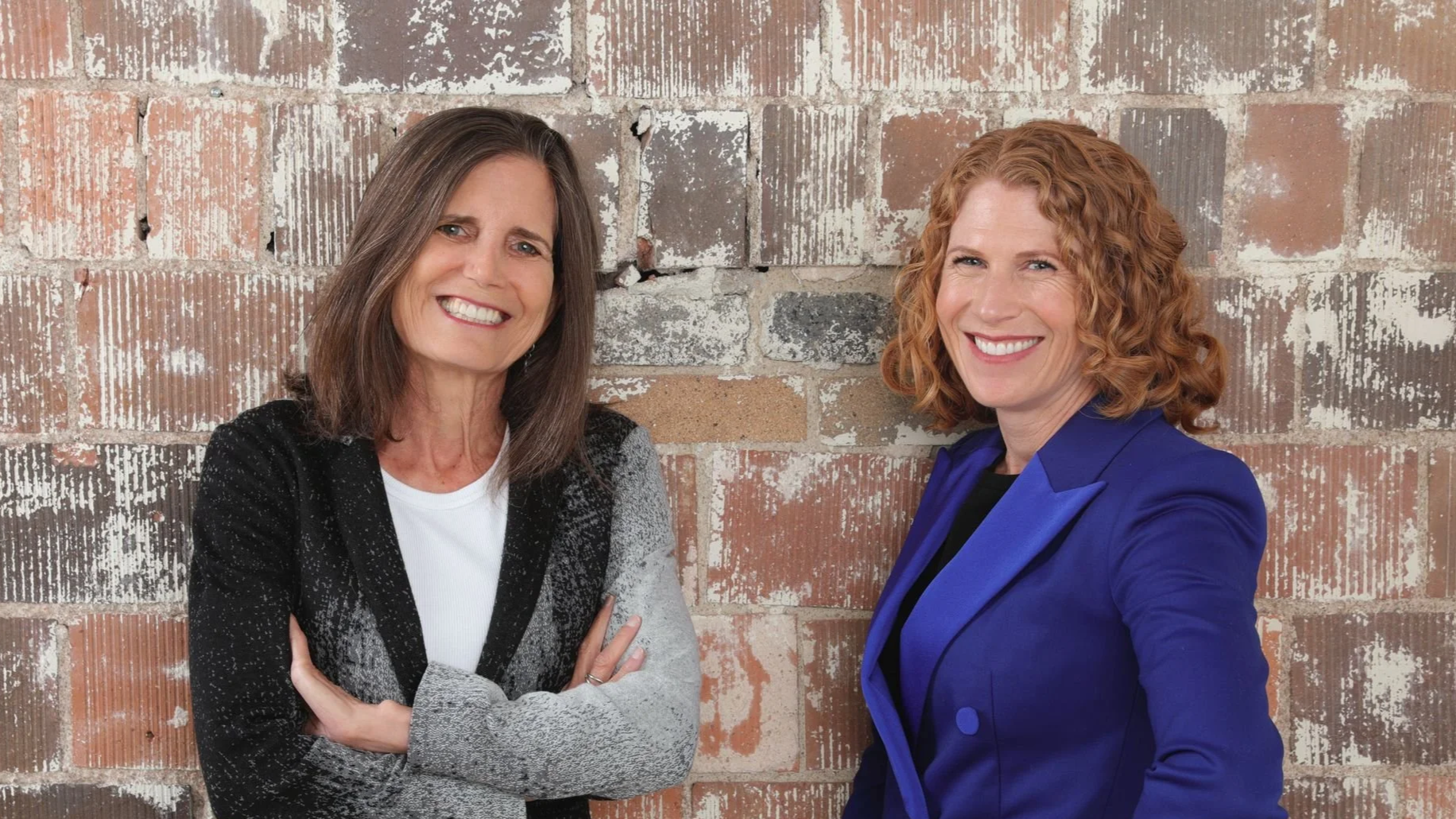
I worked primarily with Sue Heilbronner and her executive assistant Liz Nelson on this project and they were great to work with—as you might guess about anyone who poses in a pink jumpsuit for their marketing pictures!
Because Sue also published another book before I created this case study, we get the double privilege of learning some of her takeways from publishing not one, but two books in two years, and the two different paths she took (independent publishing and working with a major publisher).
For a full flip-through of the book created by Julie, you can watch this video:
Sue Heilbronner’s Book Done Timeline
💡 Idea born: When teaching a version of our Coaching Certification for Leader Coaches at a cohort at a large company
✍️ Writing started: August 2023 (Sue actually reached out to me when she first started writing! Thanks, Leah Pearlman, for the referral!)
📚 Book cover design started: January 2024
📨 Files ready for interior design and layout: April 2024
✔️ Book done (released): August 1, 2024
(You can see from this timeline that Sue, Kaley and Liz know how to get stuff done!)
Sue Heilbronner’s Book Done Process
Tell me more about your book!
Leader Coach is a practical, actionable guide for leaders who wish to bring more coaching into their leadership and their organizations. Looking through the lens of conscious leadership, sought-after executive coaches Kaley Klemp (co-author of The 15 Commitments of Conscious Leadership) and I (now also author of Never Ask for the Sale) bring the notion of “leader coaching” to life in Leader Coach.
Did you self-publish, or work with a traditional publisher? If you self-published, did you use a print-on-demand printer? If so, which one?
I self-published using Amazon KDP.
Was this your first book?
For Sue, yes; for Kaley, no.
Tell me about how you came up with your book's title.
We use the concept of “leader coaching,” so the name Leader Coach seemed concise and right.
Tell me a bit more about the cover design you chose.
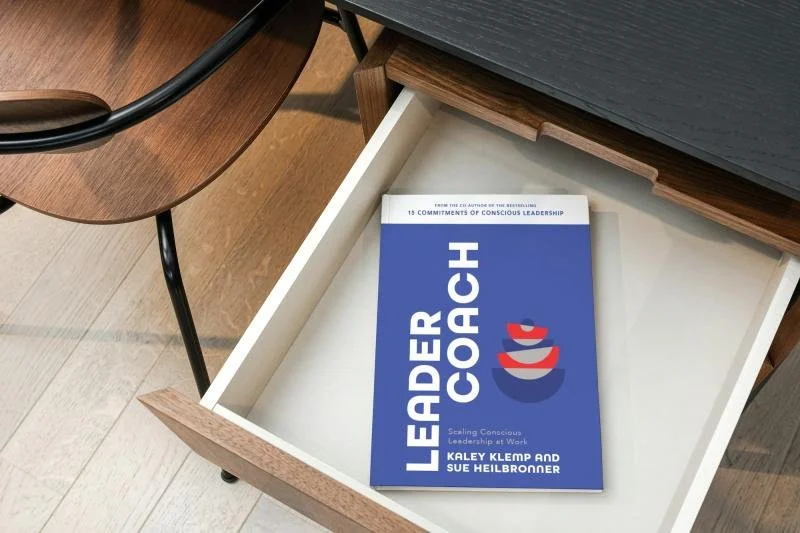
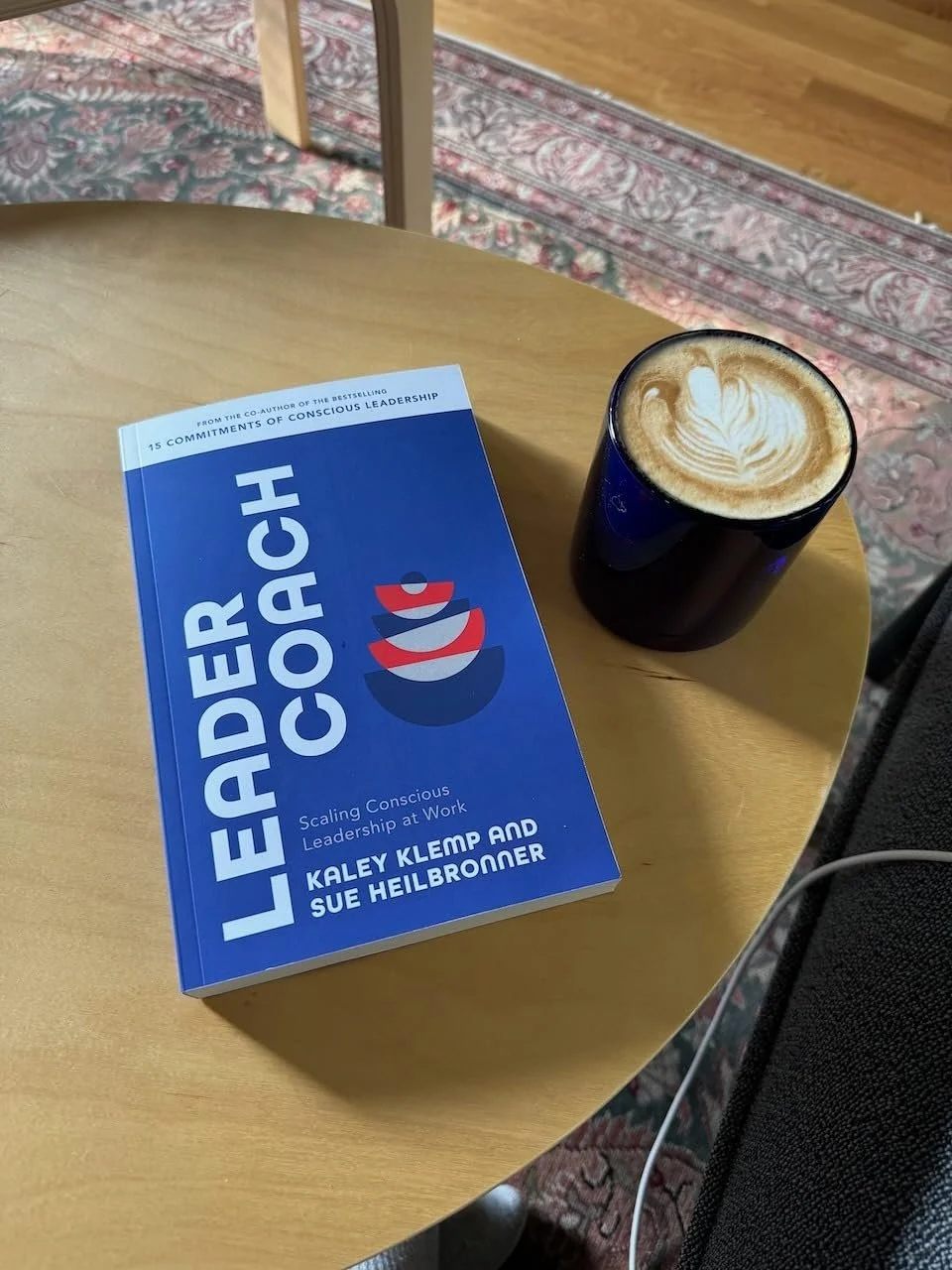
We wanted (of course) a concept that reflected the themes of our book but also something a little mid-century and in our preferred colors. Julie executed brilliantly on the first try.
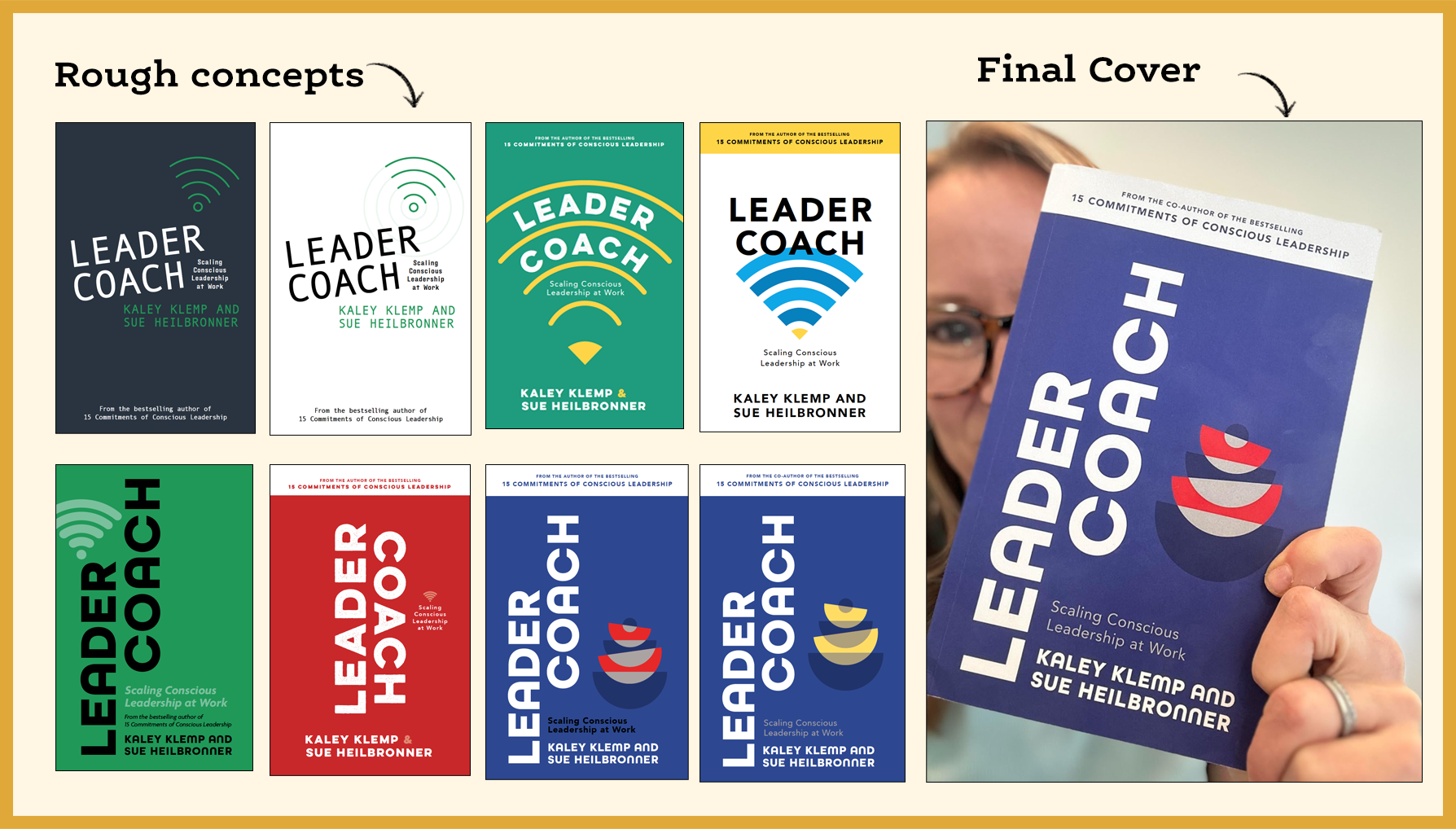
During our book cover kick-off call, it helped a lot to discuss some book covers that Sue liked and did not like and learn what made her gravitate to a particular style or cover. I asked Sue if there were any concepts in the book that would lend themselves well to a visual for the cover. Sue realized that the wifi symbology used in their coaching discussions could make a perfect graphic metaphor. From the beginning of the cover mock-up stage, we toyed with wifi-like symbols on the covers and ultimately went with a design that had a subtler wifi vibe but also gave a midcentury modern feel and a zen pile-of-rocks vibe, all in Sue and Kaley's brand colors. —Julie
Were you able to pull a lot of material or charts and graphics for your book from course notes that you already had prepared for your live workshops?
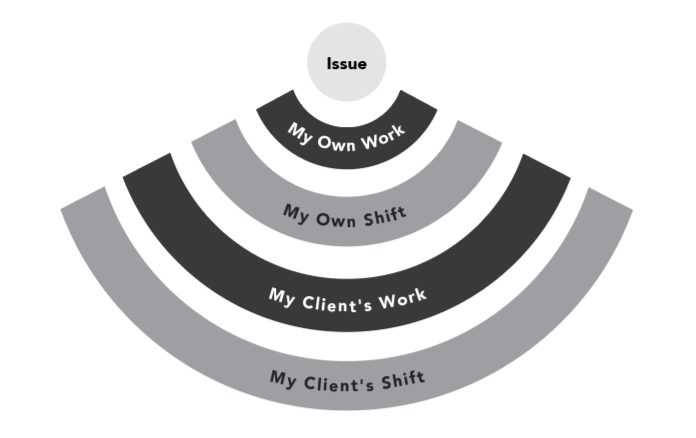
The text was crafted entirely fresh. We both have taught that stuff a lot in each of our day jobs, but the writing itself was all new. We took about half of the charts and graphs used for workshops and adapted them for the book. (We then used the cleaned up book graphics for the workshops!)
What service providers or partners did you have in creating and producing your book?
Developmental editor, copy editor, proofreader, cover designer & interior designer (Julie!), launch coach.
Sue Heilbronner’s Book Done Takeaways
What was the biggest surprise during your book project?
How difficult the fine-tuned editing stages were to achieve. It was an enormous amount of work to create an error-free full-length book. Getting feedback from early readers was terrific, and implementing it was a lot of work. Having a great developmental editor, copy editor, and proofreader was great. Implementing what they all caught was intense, but it made the book stronger.
Which part of your book project was the most fun or rewarding?
Working with Julie, whose design work from the cover to the inner layouts to the many charts and graphs we used was extraordinary. Below you see the most complex chart of the book which spanned two pages and was turned 90 degrees to best fit the print format.

When you write another book, what will you do the same way? What will you do differently?
I have already written my second book—it was published through a major publisher in 2025. After breaking the ice with Leader Coach, I was more ready, more open, more enthusiastic about writing another book, Never Ask For the Sale, which released just about a year after Leader Coach. Publishing with an established publisher isn’t as easy on the front end, but it was valuable to have a publisher behind me for some of the most challenging aspects Kaley and I managed on our own with Leader Coach.
Do you think that having self-published your own book first helped you get the publishing deal?
I do not. Honestly, I soft-played the existence of Leader Coach with the publishers in the sales process. I think it would actually be frowned upon. (Due to timing, they saw it.) If Leader Coach had been a phenomenal commercial home run, of course, I might have been quicker to tell the publisher about it.
Were you writing your first book (Leader Coach) and your second book (Never Ask for the Sale) at the same time?
I finished writing the first before I wrote the second. (Beware—self publishing your book may leave you, like it left me, with a persistent interest in writing your own book with a top publisher!)
Did your first book publishing experience help you with your second?
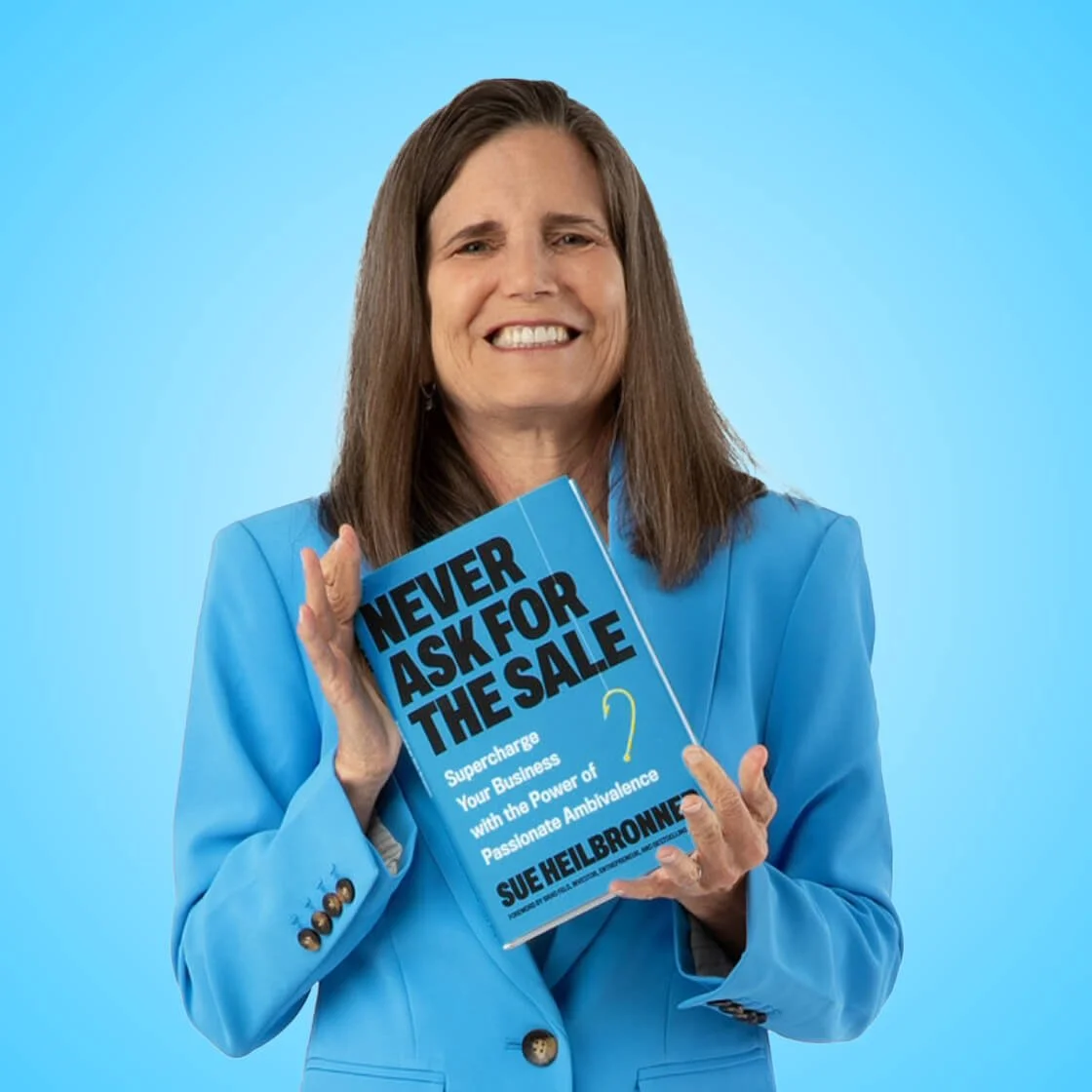
I learned a lot from Leader Coach that helped me with the second book. I think it’s so much harder to write a high-quality, well-edited, beautifully designed self-published book. We were so lucky to find great resources like you, but it took a lot of heavy lifting to source and liaison with each contractor and especially to work with editors and proofreaders. Working with a great publisher made the “finishing” of the book far easier.
Can you give a bit more detail about the main difference building your own team as a self publisher and working with a publisher’s team? I was especially curious about why you preferred your experience working with editors and proofreaders that the publisher provided.
Self-sourcing all our own supplemental resources for self-publishing was far harder than having support from in-house resources that share an equal stake in the outcome of the finished product.
Working with freelance editors was a good experience. However, when working with the publishing house editors, they also owned the project. Even committed freelance editors do a project, submit edits, and move on. Or at least that’s how my experience went in self-publishing. I owned responsibility for moving the process along, guarding the evolving manuscript as input came in. In addition, in my self-publishing journey (and perhaps I could have done this differently), I felt I was the ultimate “editor.” I had different people, but I was the connection point for all of them. When working with Balance/Hachette, my editor held that thread. It took a ton of weight off me, even as an author who cared deeply about the final product. In short, my main editor at Balance is better at being an editor than I am, and that created a ton of comfort and, likely, made that book better.
Sue has written extensively about her book publishing experiences, espeically about releasing her second book. Take a deep dive here: https://www.heysue.com/blog/writing-a-book
Is there anything else you’d like to share about your book project?
Self-publishing a book is extremely difficult. Even with hiring superb resources, getting it into the world was undoubtedly one of the hardest things I’ve ever done. The workload is enormous. The room for error nearly infinite. Yes, you get to market faster. Yes, you earn more per copy sold. Yes, you have complete control over pricing and access to sales data. Yes, you can use the IP any way you want to. And still, extremely hard, and costly to do it well with a good team. (Take a look at this LinkedIn post if you’d like to see Sue and Kaley’s cost breakdown for all aspects of Leader Coach.)
But the book came to market. And it is a fantastic resource to Kaley’s and my clients who want to pragmatically launch and scale conscious leadership at their companies. It’s a phenomenal resource for anyone who has never met Kaley or me.
What is your best advice for marketing a book?
Working through our networks and clients has been successful. We use the Leader Coach book at our events, so we have a continual audience for our books there as well. If you’d like to know more about how I marketed my second book, you can read about that here.
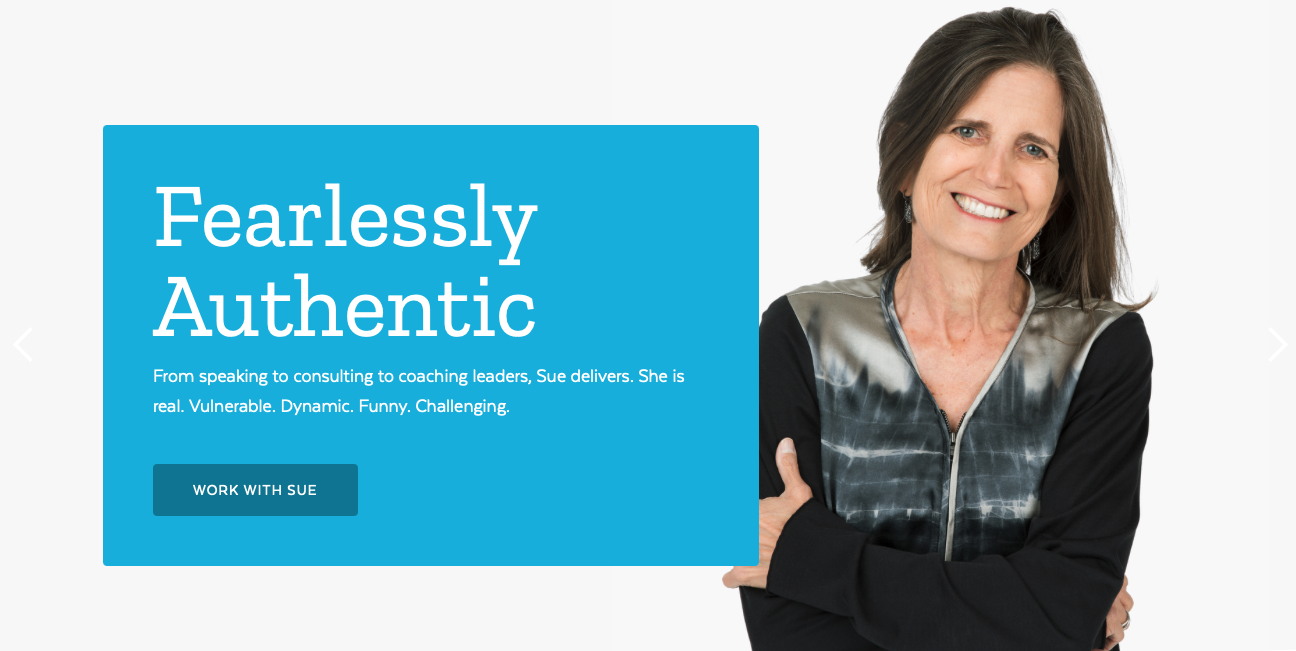
Thank you to Sue for sharing her project and process. You can learn more at www.heysue.com or about Sue and Kaley’s book and their coaching at https://www.inductive.work/book. Sue’s second book, Never Ask for the Sale, can be found here: https://www.heysue.com/never-ask-for-the-sale
If you or someone you know is working on a book and would like to support a good cause, check out my Pick a Book Designer's Brain promotion to help my niece, who has quadriplegia, get home modifications in exchange for my input (from 20 years of experience) on a book project!